
I spent my fifth and sixth development weeks getting the game’s overworld generation in order. After studying others’ prior work in random map generation, I implemented Perlin noise for my game. Then I tweaked the parameters until the results gave me dreams of Alefgard.

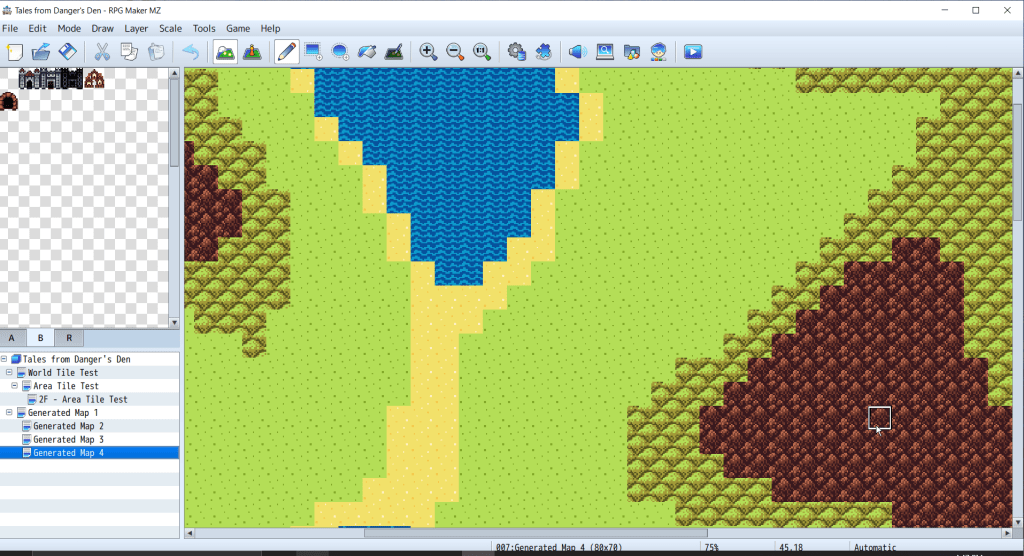
This is what early map generation looked like in RPG Maker’s editor. The screenshot above on the left shows region numbers representing elevation.
To shape the worlds into closed island maps, I start with a grid of zeroes and apply a series of transforms:
- A simple additive transform adds the same number to all cells, establishing the average elevation.
- A Perlin noise transform adds and subtracts from the grid in the shape of random waves. A nice large one raises the land into hills and mountains and lowers it into valleys and lakes.
- But just one noise transform would make for smooth, blobby-looking contours. I’ve set up plugin parameters so that I can apply as many Perlin noise transforms as I like, at any depth or breadth of my choice. After the first deep, broad transform, I add more noise transforms, with the depth and breadth roughly in half for each. Smaller Perlin waves give the terrain more of a rugged, natural look.
- Next I apply a rounded “bowl” transform. An upside-down bowl lowers the edges to shape the world into an island. An upright bowl raises the edges to make a valley world. I’ve configured some of each world shape, for variety.
- The final transform crimps the edges of the map to ensure that the edges are closed off. Low elevations are plunged into the sea; higher elevations are made mountains.
- Once all transforms are made, elevation cutoffs determine what becomes mountains, hills, plains, beaches, and water.
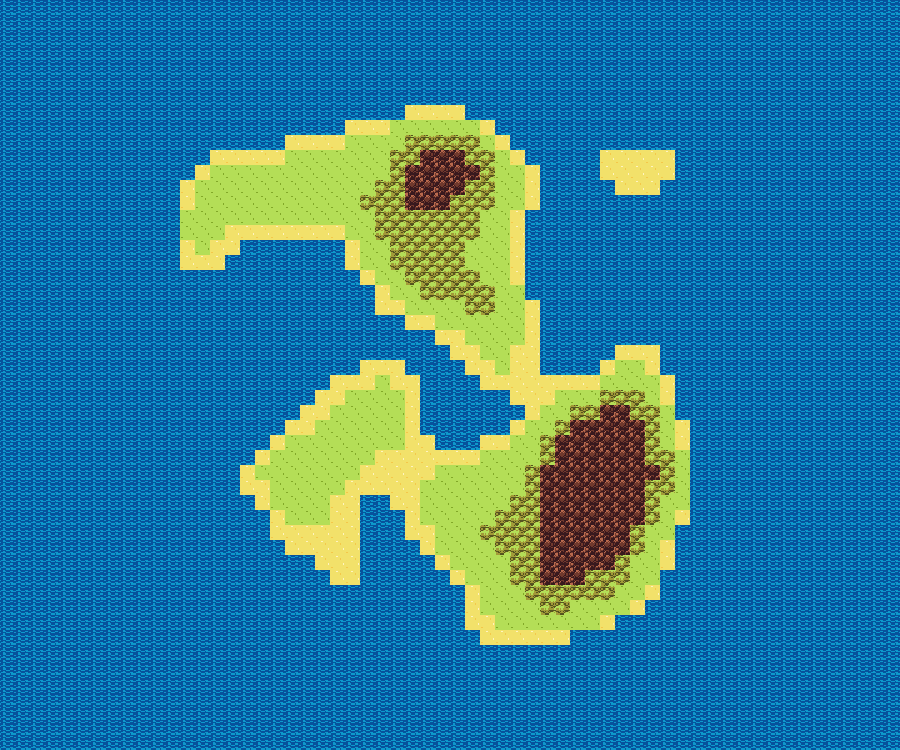
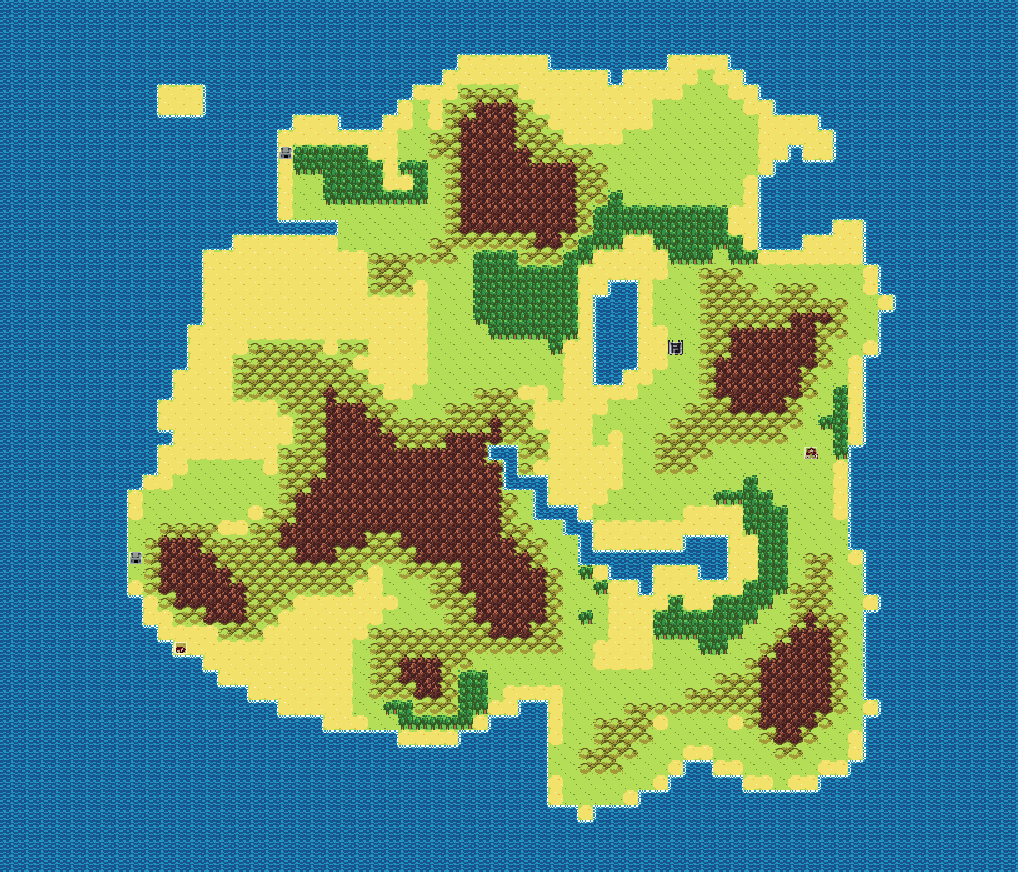
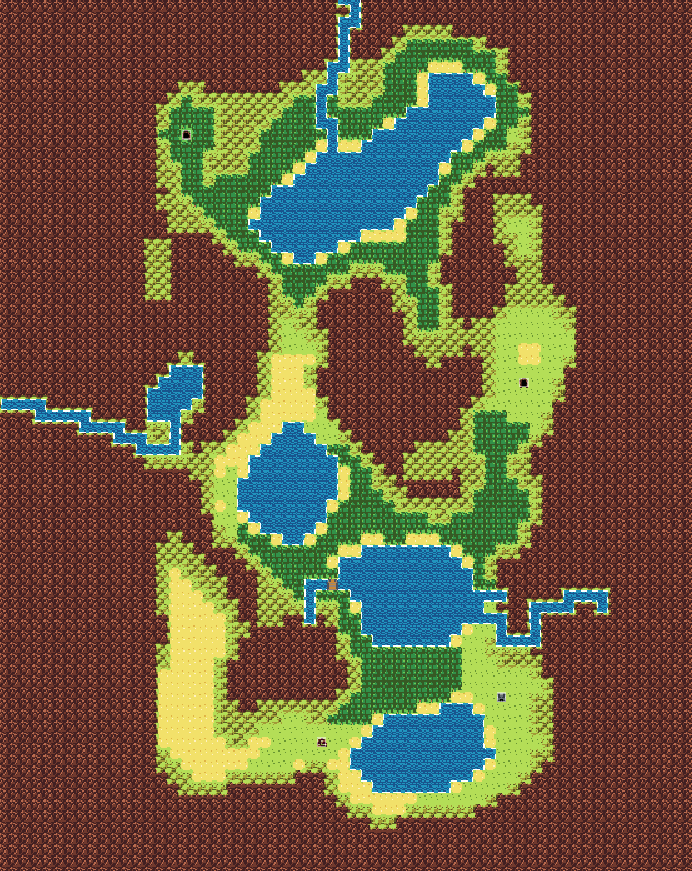
Below are early examples of an island and a valley map.

Next I gave each world a humidity grid on which random “wet spots” and “dry spots” spawned and spread based on terrain shape and random chance. The wet spots became forests, and the dry spots, deserts. By configuring different humidity baselines and different wet and dry spot spawn counts, I made some worlds mostly forest, and some mostly desert.
With autotiling applied, the little worlds start to look prettier.
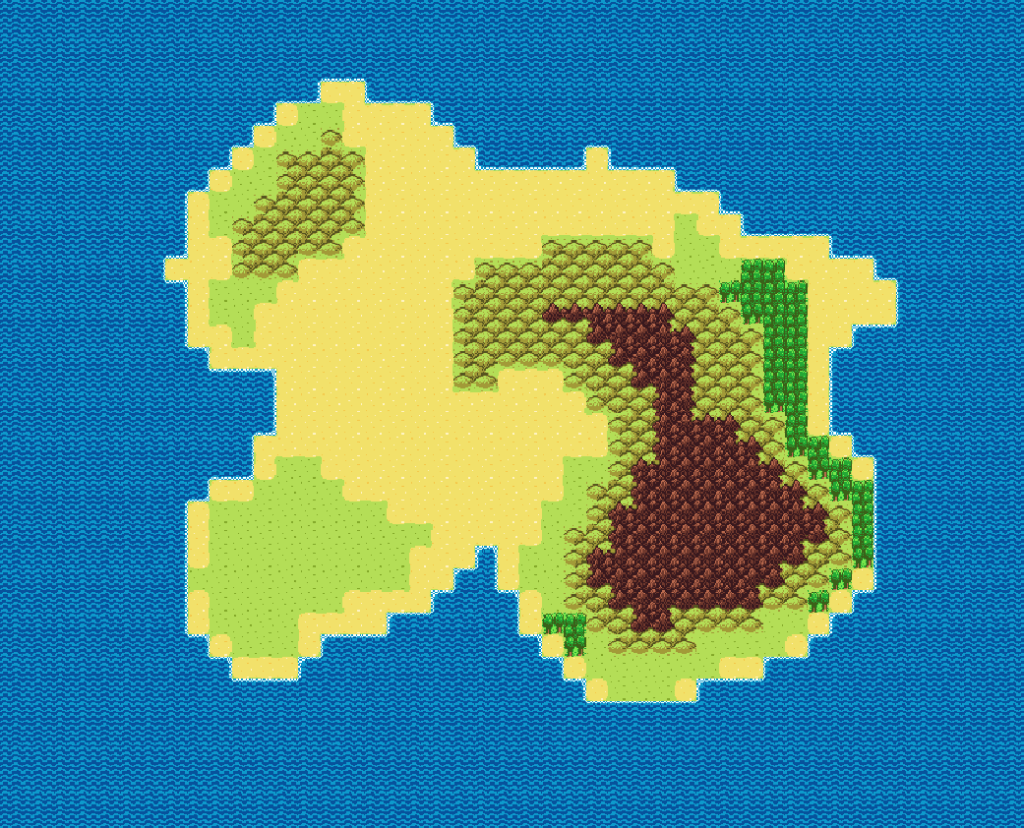
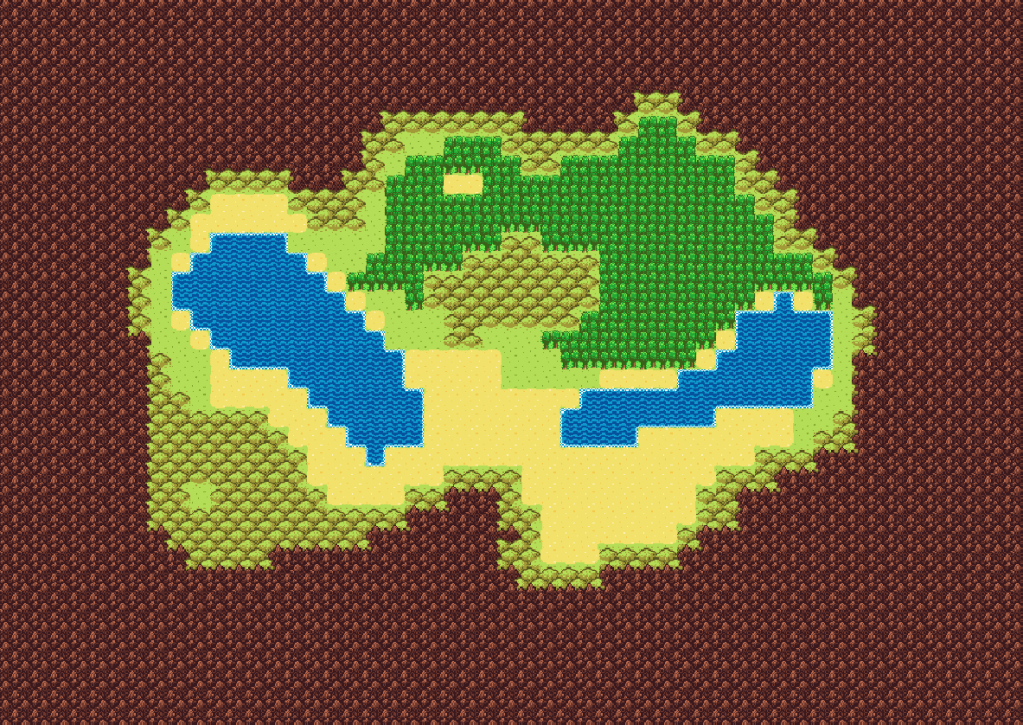
World generation stayed much like this through Alpha 1 and Alpha 2, merely adding points of interest. Later revisions would enlarge the maps and add occasional bay worlds, mountain passes, rivers, and bridge-connected islands.
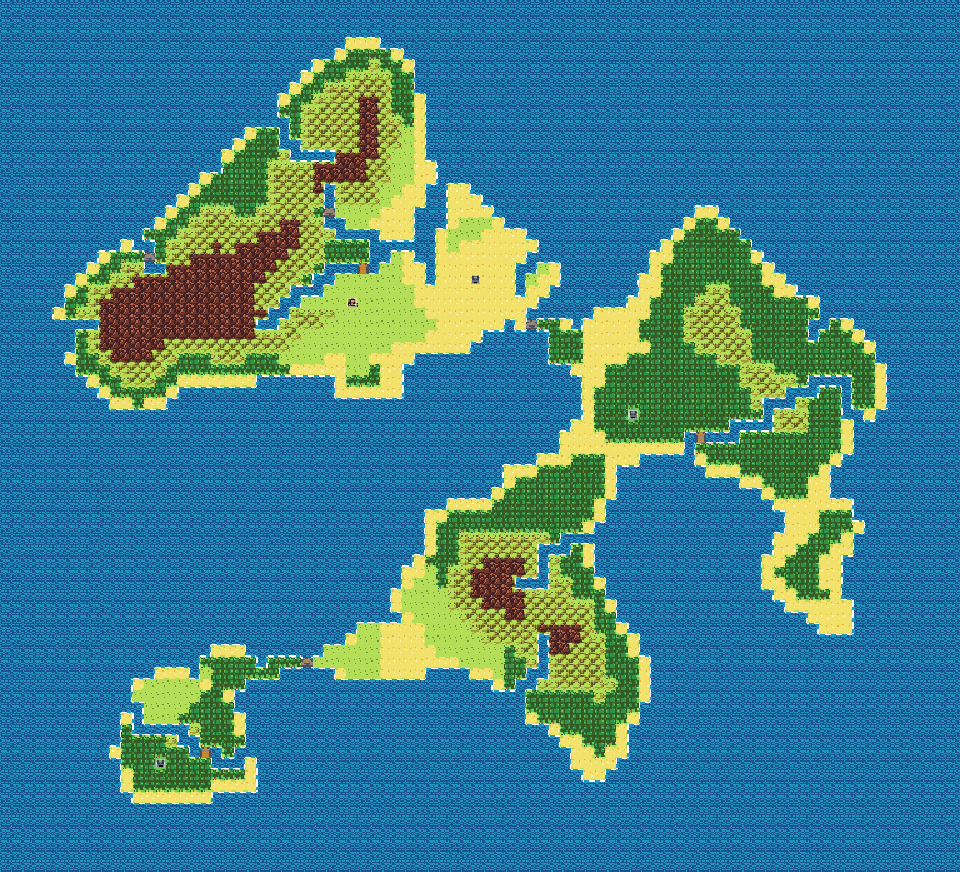



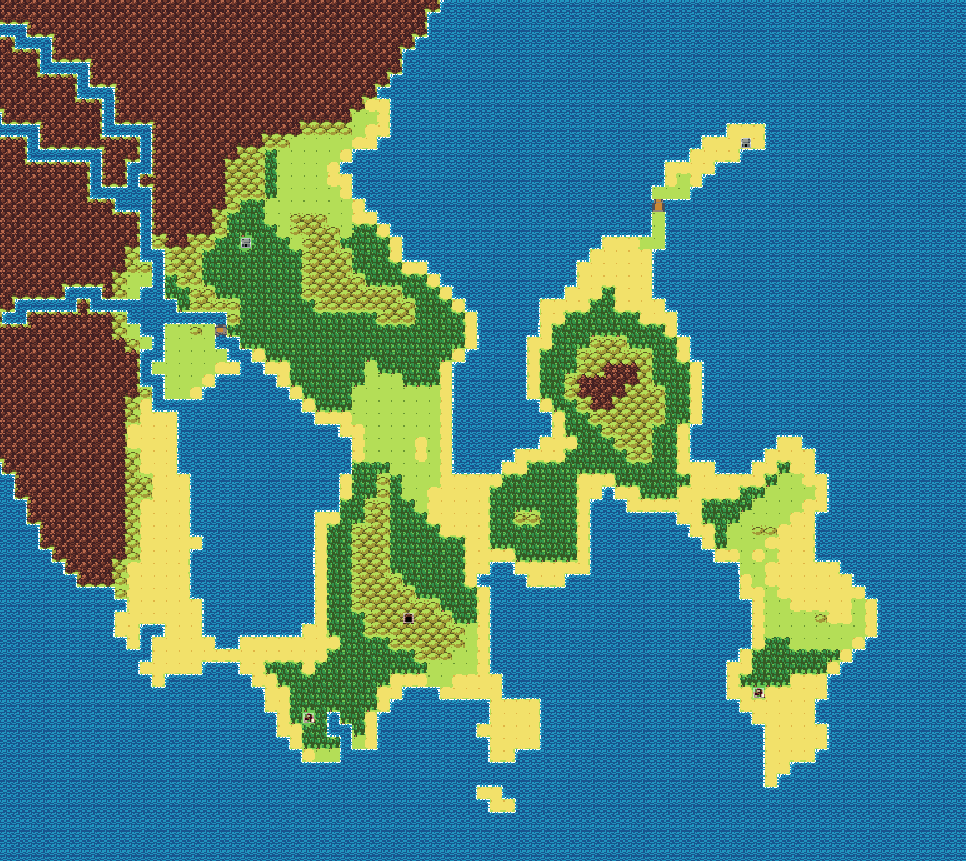


Future plans include setting up ship routes, making biome-specific points of interest and enemies, and adding more biomes, including jungles, snowy places, and more types of desert regions.
 Stories from Danger's Den